Cancer Insight Challenge
An experience that turns cancer education into active learning
When one of our team member stumbled across this cancer fact-finder website, we found the research and content interesting. However, when we shared it with friends and family, most barely looked through it. The information was valuable, but the format wasn't engaging enough to hold attention.
While some myths are relatively harmless, others can influence how people think about their health and the choices they make. Growing up, we heard things like "don't keep your phone too close to your chest" or "drinking coffee causes cancer." These claims are easy to remember because they're simple and often repeated, even when the evidence behind them is weak or misunderstood.
That raised an interesting question: if misinformation can spread so effectively, could accurate information be made just as memorable?
Services Provided
- UI/UX Design
- Website Development
Project Timeline
Oct—Oct 2024
Approach
Before making the experience fun, we needed to make sure it was trustworthy.
We started with data provided by the Cancer Fact Finder organization and reviewed the available facts, filtering out information that was inconclusive or difficult to confidently categorize as true or false. Since the goal was to challenge misconceptions rather than create new ones, we prioritized questions where the evidence was reasonably clear.
With the content foundation established, the next challenge was getting people to actually engage with it.
A Landing Page that moves
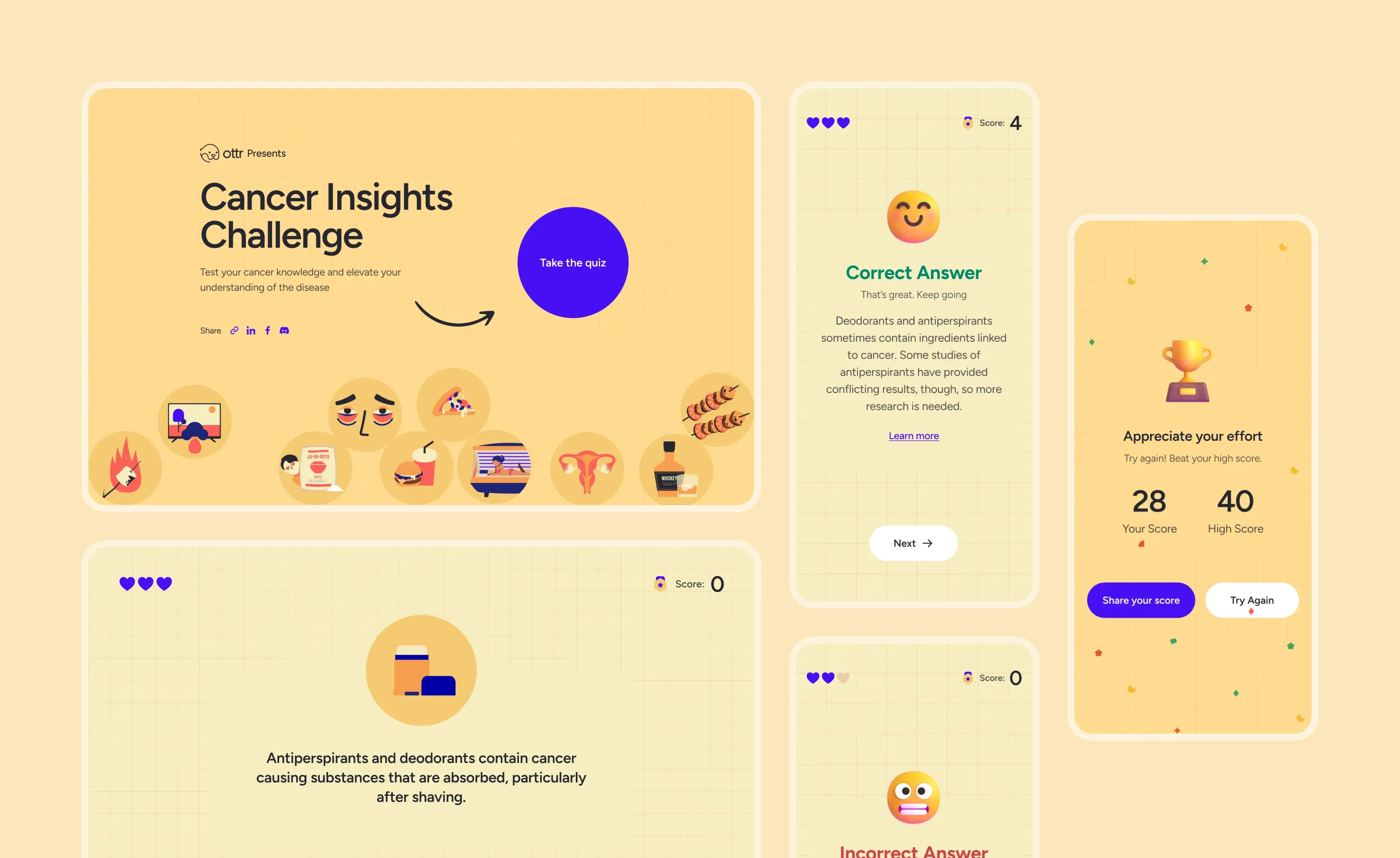
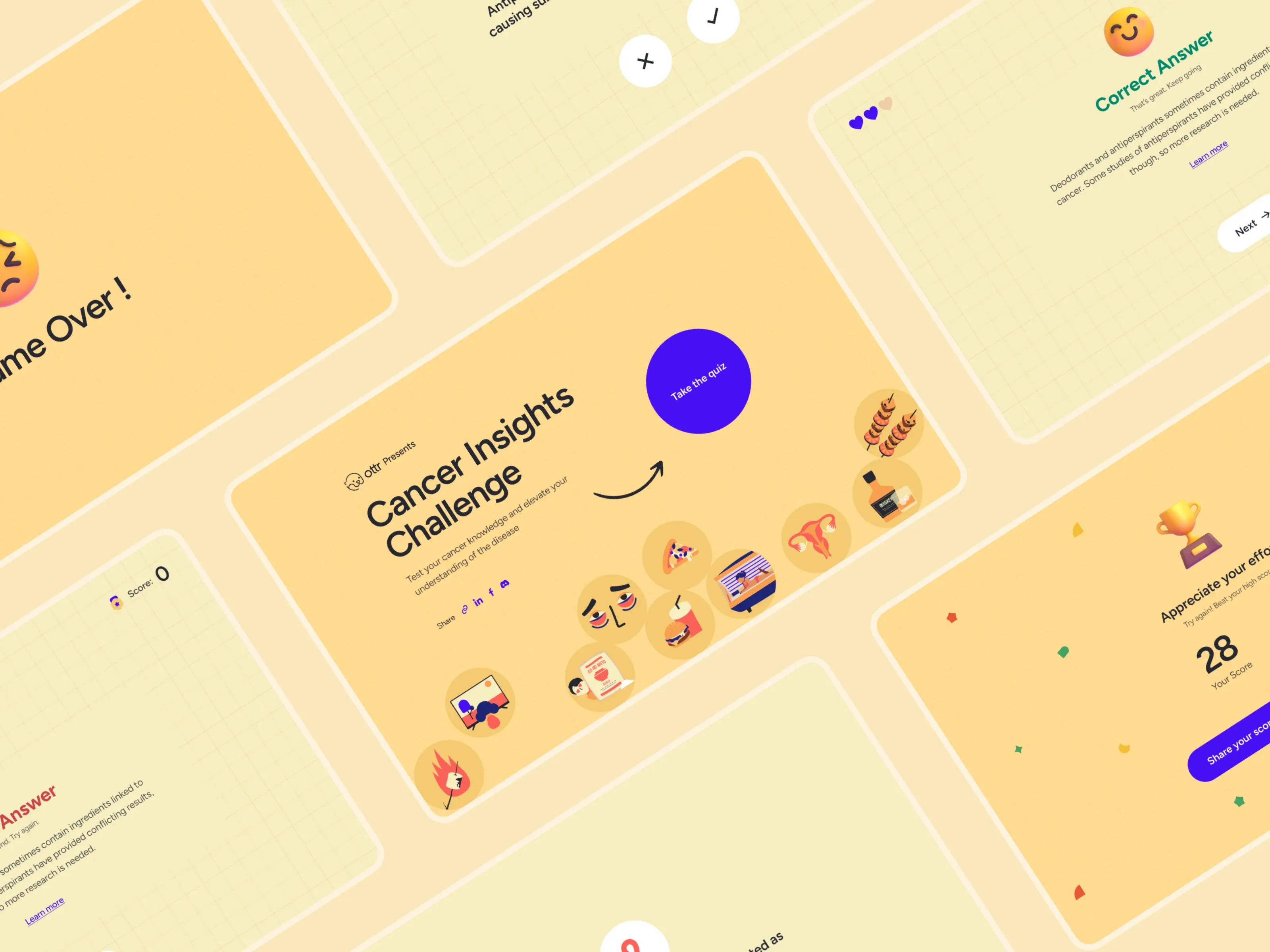
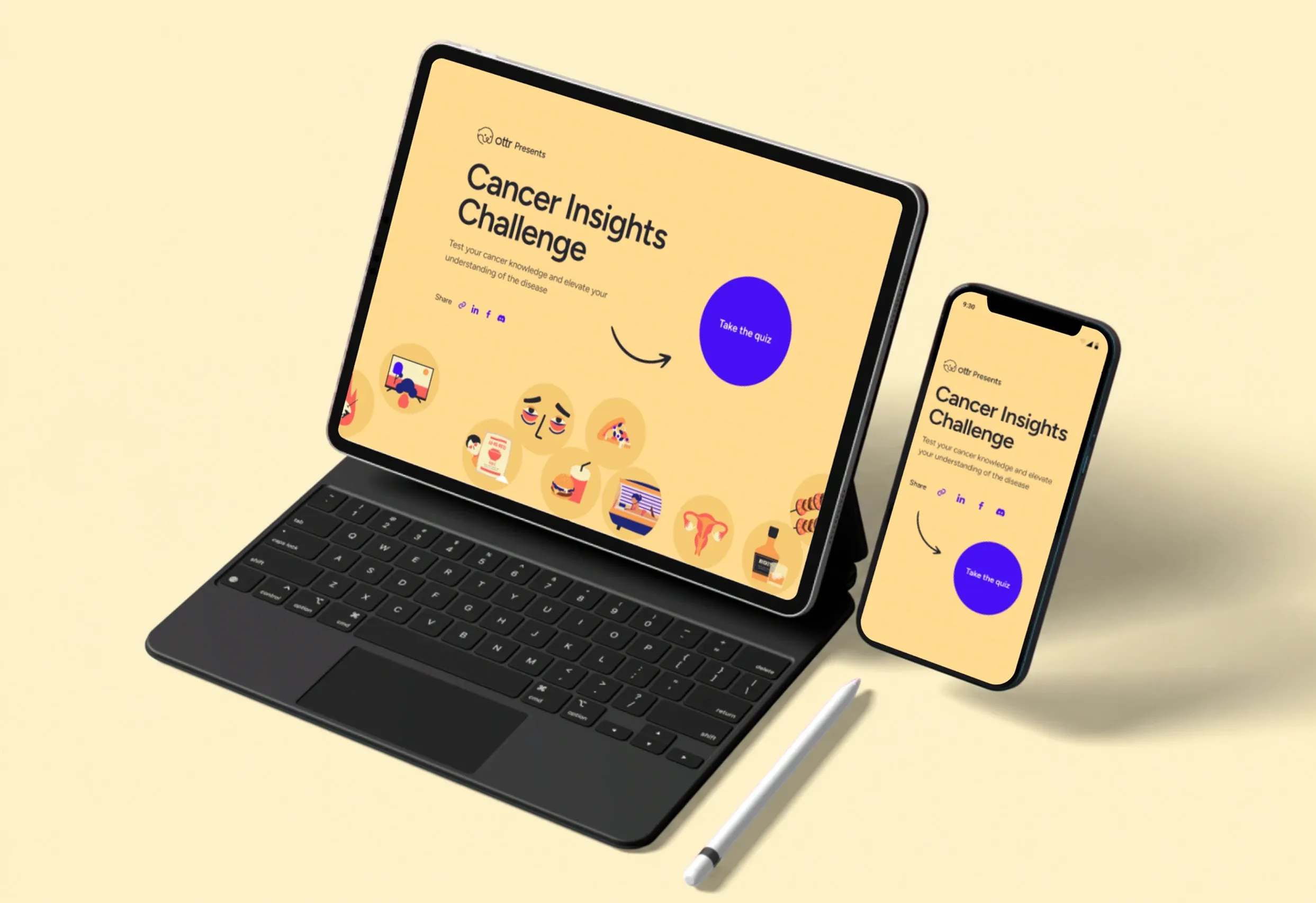
The first impression of Cancer Insights Challenge starts with motion. The landing page uses physics-based animations that react to how the page loads and how the user interacts with it. It sets an immediate signal that this is not a static page. The experience begins before any content is read, pulling users into interaction from the first second. The animations were built with mobile performance in mind, tested to stay stable on lower-end devices where physics-heavy effects often break. The result is a smooth experience across devices, especially on the phones most likely to receive a shared link.
The Weight of What You Know
Not all cancer facts are equally well known. Questions covering common knowledge, such as tobacco causing cancer, were awarded fewer points. Lesser-known facts, such as the cancer risks associated with certain birth control pills, were awarded more.
The weighting was based on observations from internal testing and team discussions rather than formal research. Because these assumptions could be imperfect, score differences were intentionally kept small, ranging from 4 to 10 points, so the game remained fair while still recognizing more difficult questions.
Built to Surprise You Again
Repeated play sessions quickly become predictable if the same questions appear over and over. To keep the experience fresh, we implemented a weighted randomization system that reduced the likelihood of recently seen questions appearing again immediately. The goal wasn't complete randomness but perceived variety. Ideally, none of a player's first ten attempts at the quiz would feel exactly the same, encouraging repeat play while exposing users to a broader range of cancer facts.
Artwork That Earns Attention
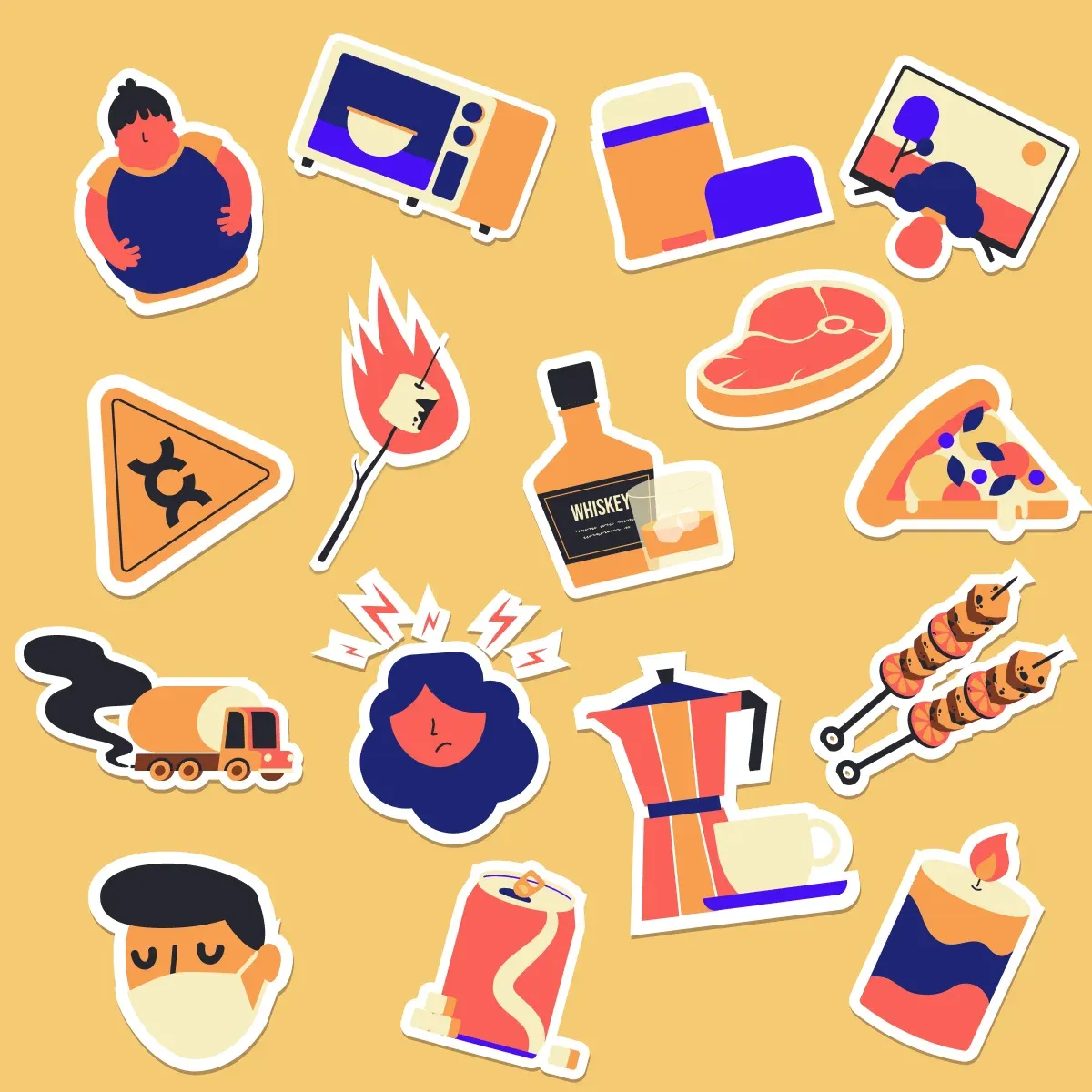
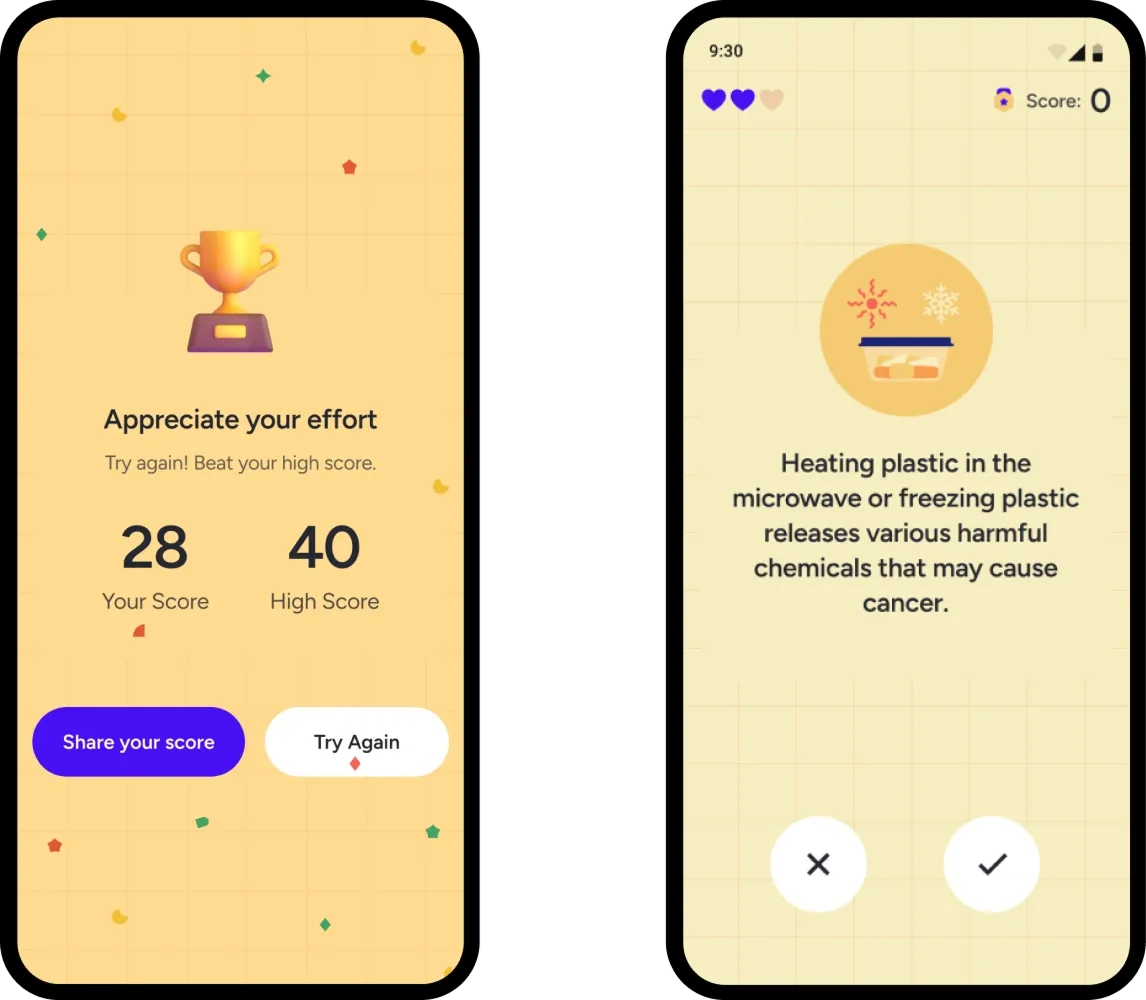
Every question in the game is accompanied by custom-illustrated artwork, created specifically for Cancer Insights Challenge. In a quiz format, the moment between reading a question and committing to an answer is brief, but it is also where the players is most engaged. Original illustrations extend that moment, ground the question in a visual context, and make the experience feel considered and complete rather than assembled from stock assets.
Honesty in Every Micro-Interaction
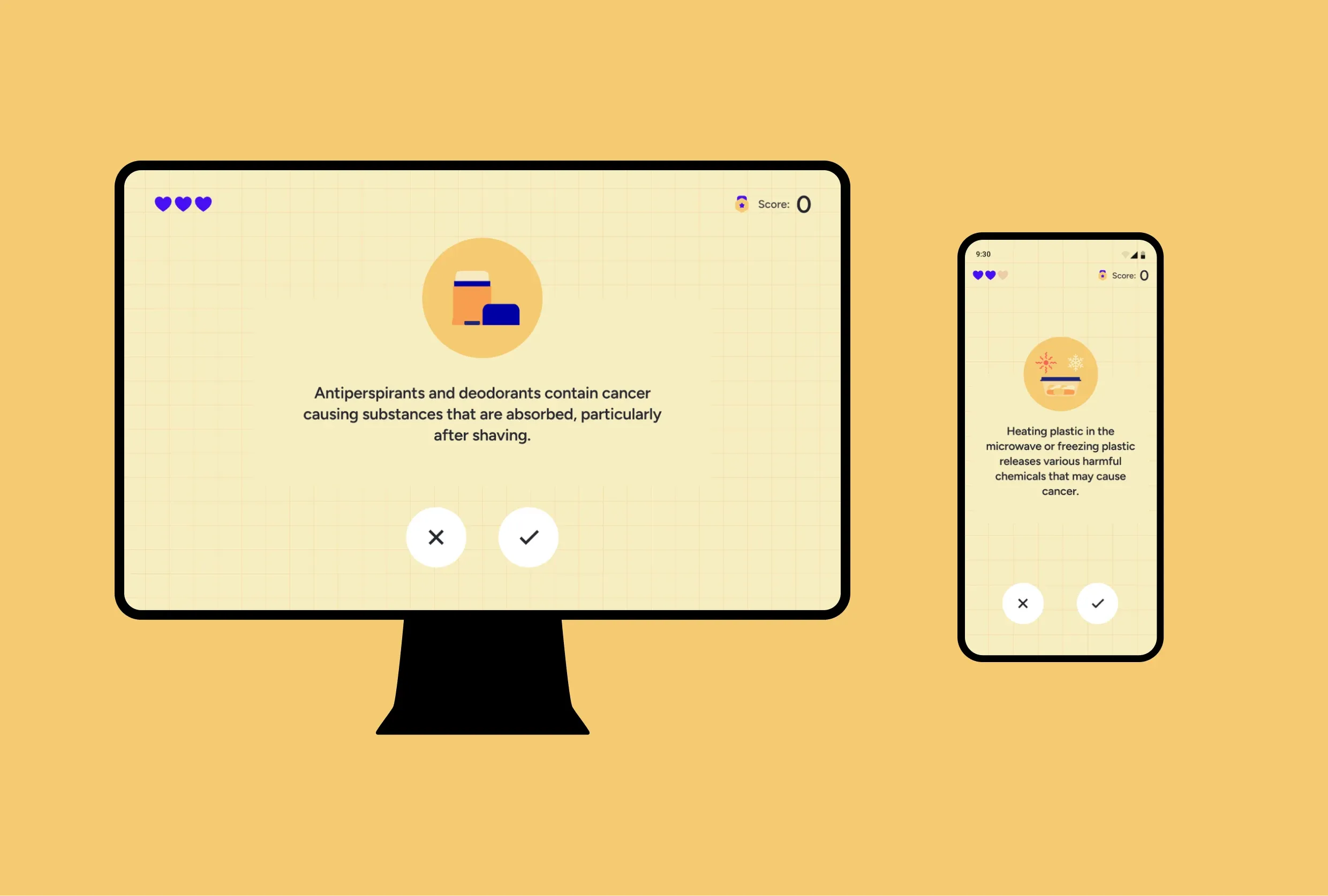
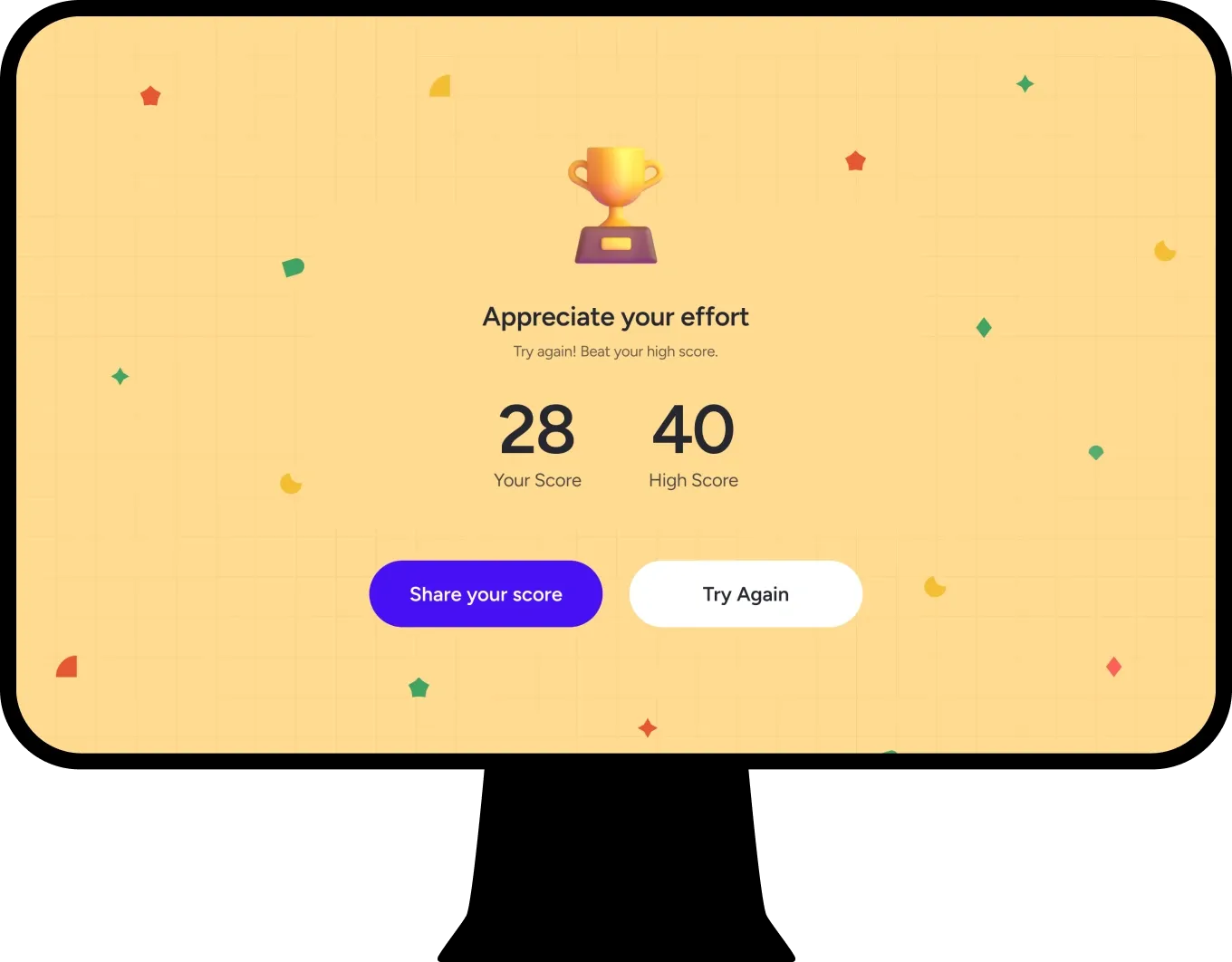
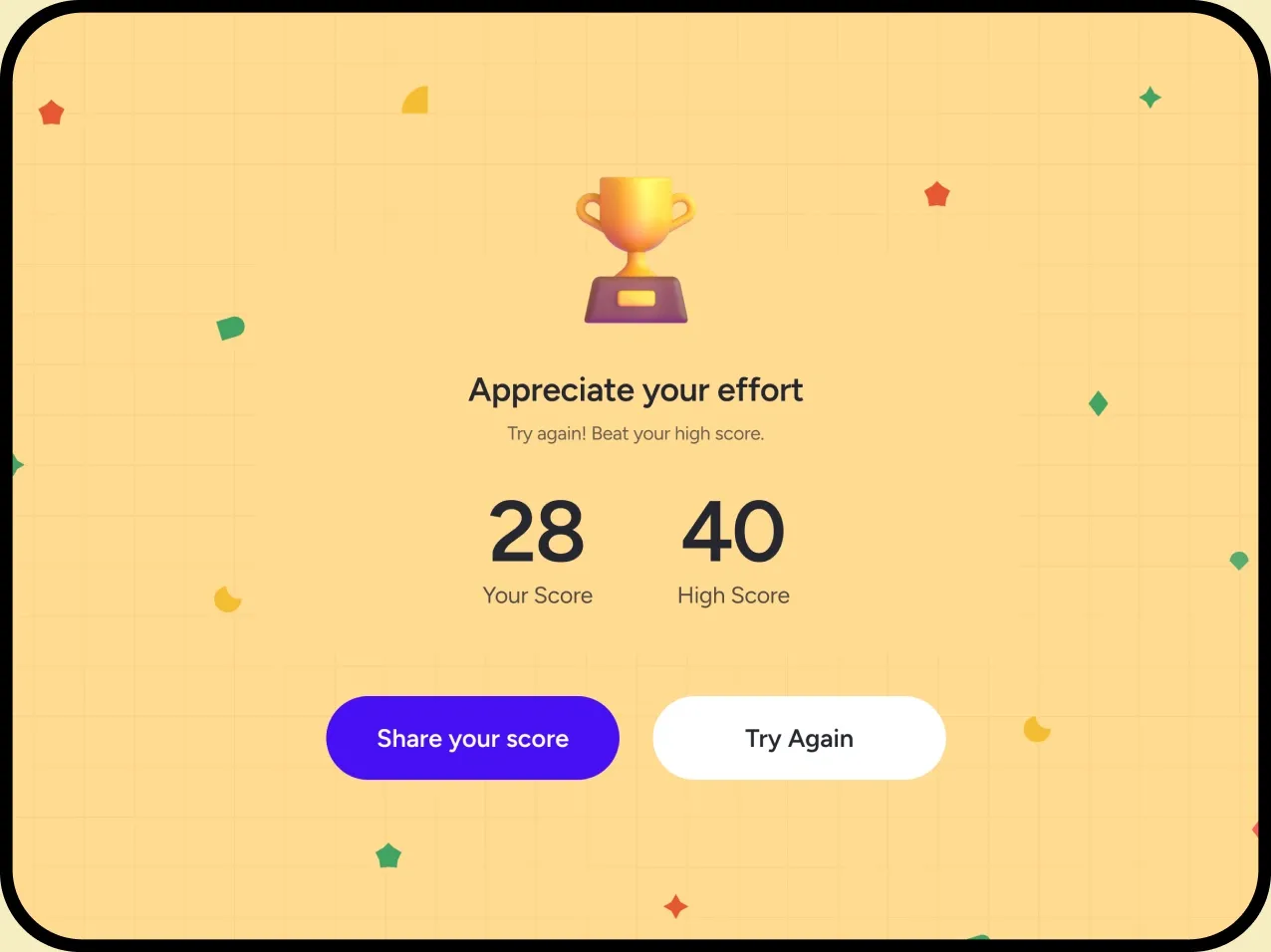
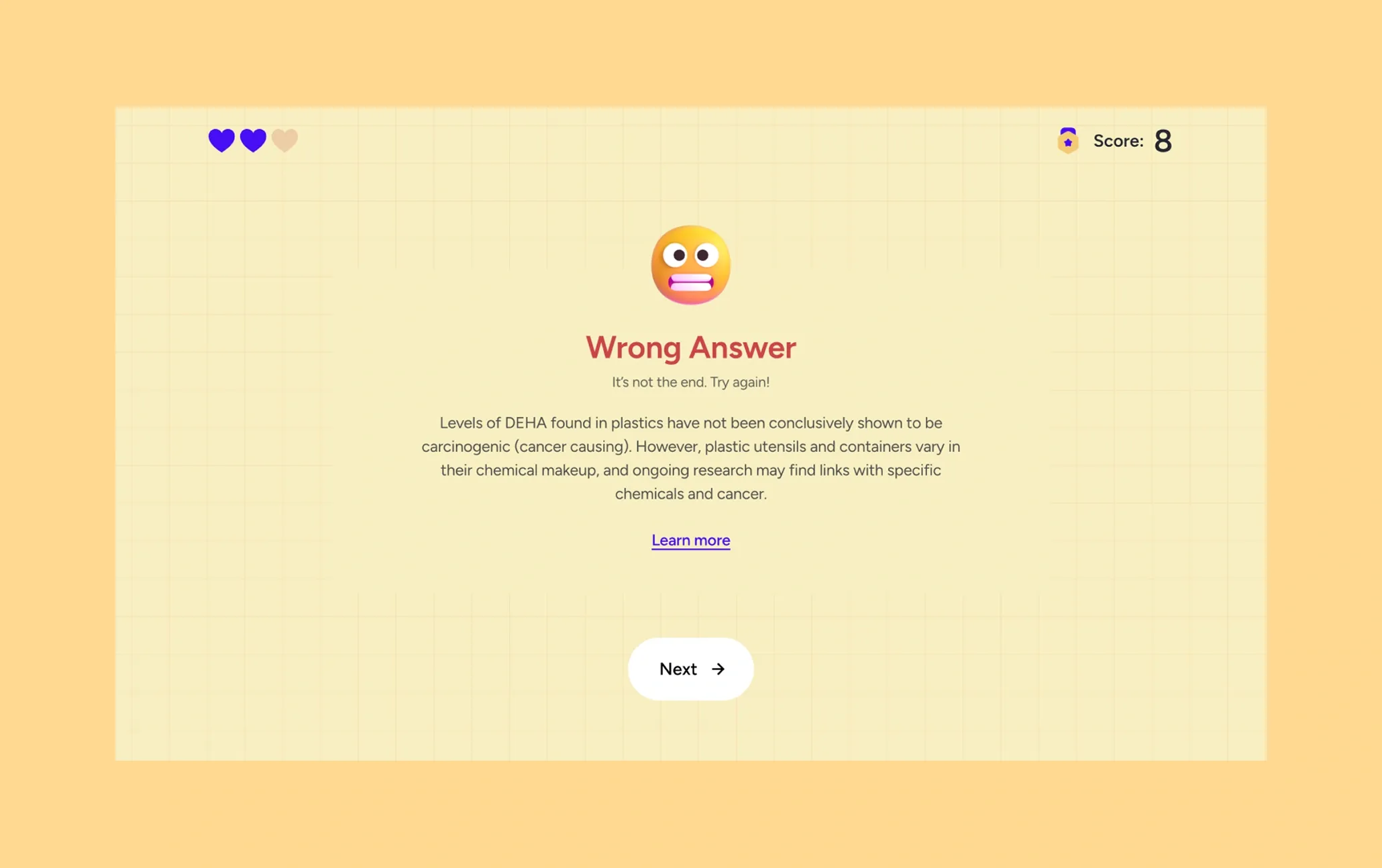
The game tracks health, a resource that depletes with each incorrect answer. A dedicated animation plays when health is lost, giving visual weight to a wrong answer without being discouraging. At the end of the game, scores are tallied with an animated counter, and strong performances are met with a confetti celebration calibrated to how well the player did. These are small details, but they matter: they acknowledge the player's effort, mark their progress, and make the final score feel earned rather than arbitrary.
No Moment Goes to Waste
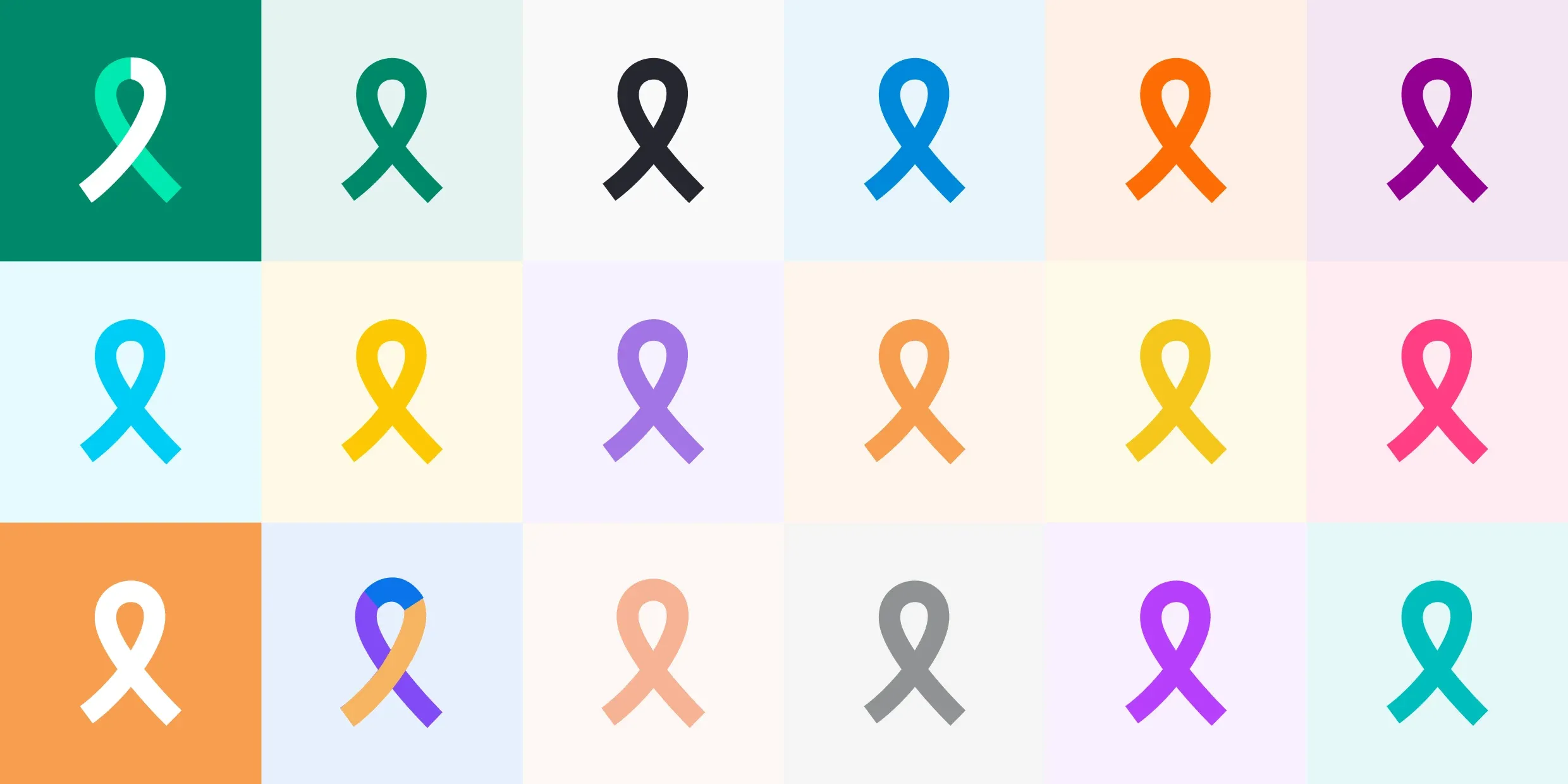
Loading screens, an unavoidable part of the experience, were turned into an opportunity. Cancer awareness facts and information about awareness months are displayed during these transitions, adding passive learning moments to a space that would otherwise go unused.
Anti-Tampering
As players became more invested in improving their scores, we wanted to discourage casual score manipulation. High scores were stored locally and hashed using a secret key. While this was never intended to be a fully secure competitive leaderboard, it raised the barrier enough to prevent simple tampering and preserved the integrity of the experience for most users.
Desktop
Tablet
Mobile
Learnings
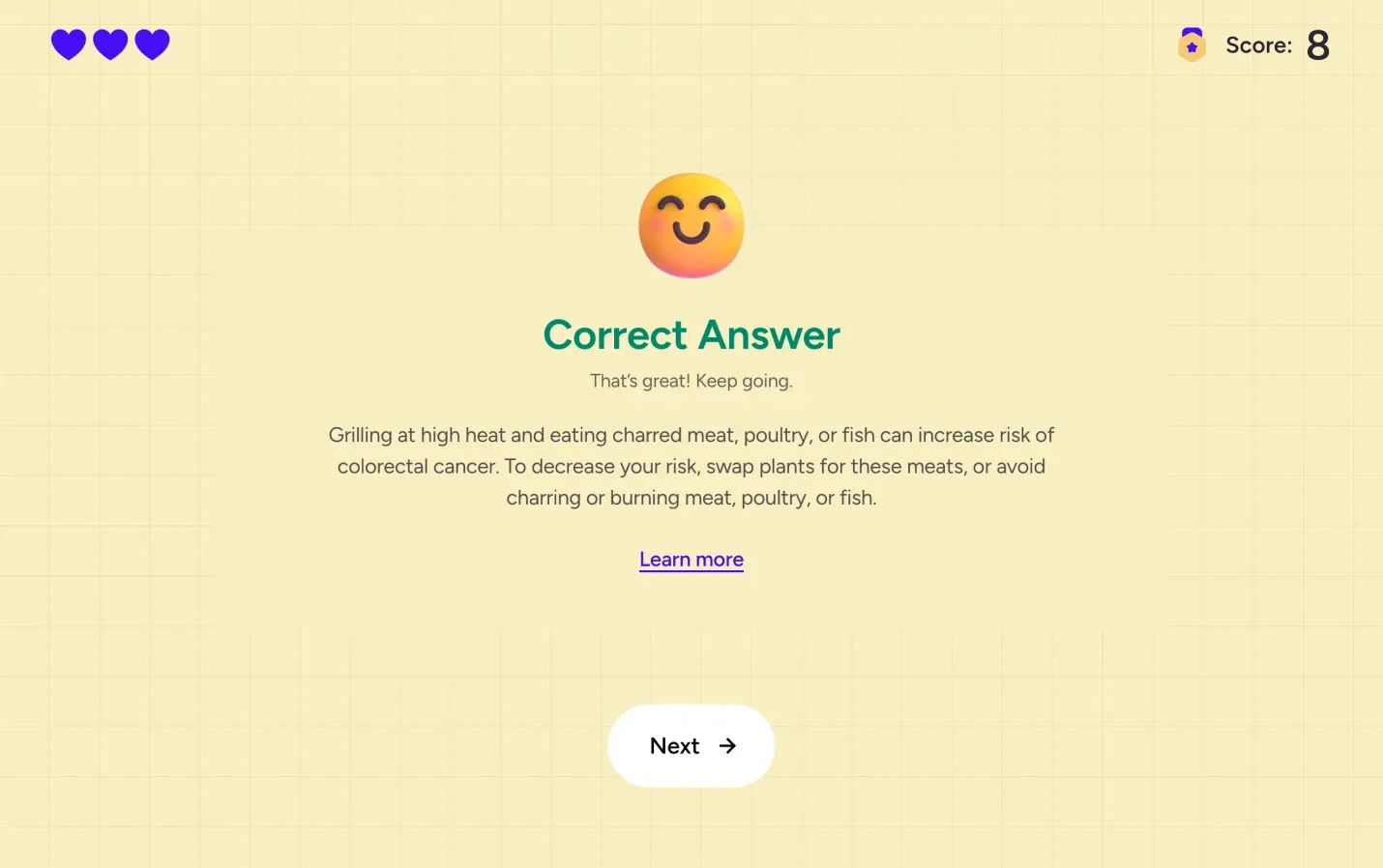
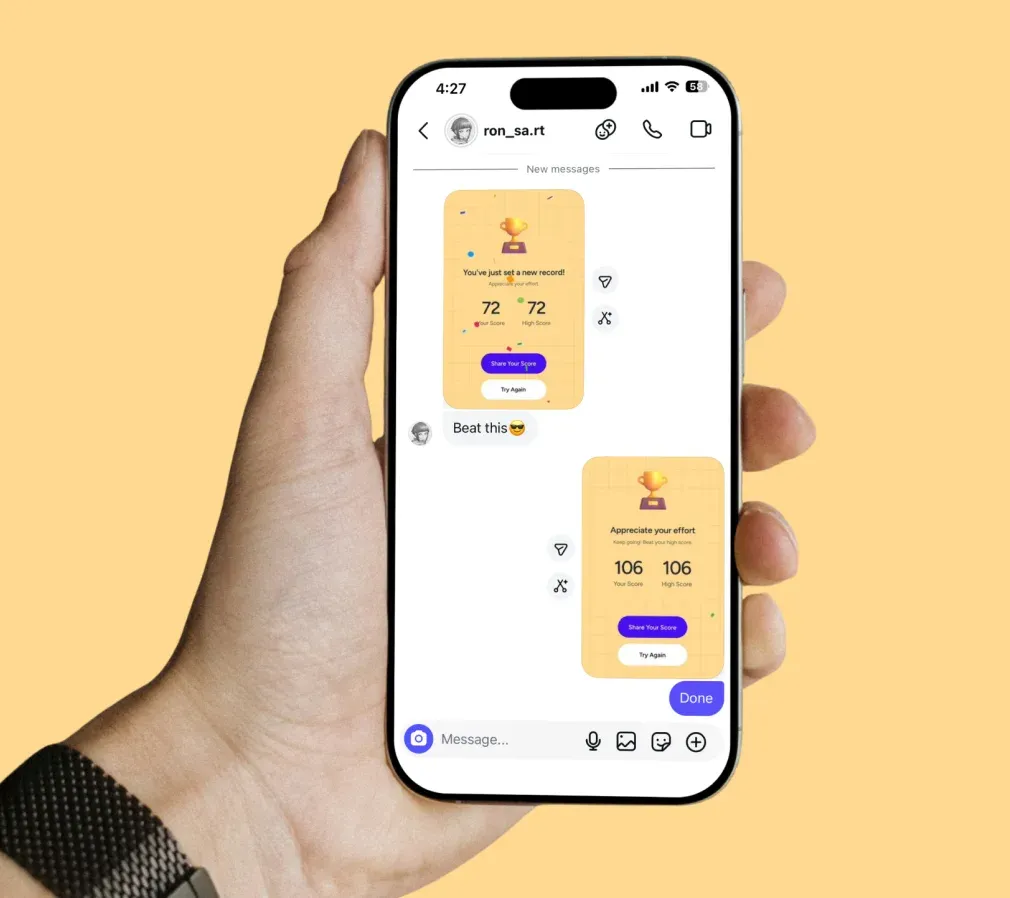
The clearest lesson came from watching how people actually used it. Users who would normally skip a static fact page stayed and played multiple rounds. The same information changed in effect once it became something to interact with, not just read. As sessions continued, competition emerged on its own. Scores, health bars, and small feedback moments pushed people to share results and challenge others, which extended the reach further than expected. At the same time, gaps became visible. Most sharing happened through plain screenshots, which stripped away context and failed to bring new users back in. Some content also raised trust concerns, with a few questions sitting in uncertain scientific territory that need stricter review or removal. And while usage data showed strong engagement, there was still no clear way to measure what people actually learned.
Result
Cancer Insights Challenge reached 1,100+ users across 12+ countries without any paid promotion. Most of the interaction came through organic sharing, with strong engagement in the United States (501), Nepal (111), United Kingdom (90), Canada (74), and Australia (39). As it spread, the feedback split in two directions. Some users focused on learning, saying the format helped them retain information they would normally forget after reading articles. Others leaned into competition, chasing higher scores and turning it into a challenge between friends. Across both groups, the pattern was consistent. People stayed longer than expected, returned for another round, and engaged with the same content in a more active way.
Improvements
The current version works, but interactions show clear gaps in the quiz. People are answering some questions too easily and getting stuck on others, but that pattern is not being captured, so scoring still relies on assumptions instead of actual play data. Content also needs a tighter check. A few questions sit in uncertain scientific areas and should either be reviewed again or removed with input from medical experts and awareness groups. Sharing is another weak point. Most users default to posting score screenshots, but once shared, they lose context and do little to bring new players in. A native Instagram Story format that carries the score, a key fact, and a direct link would make that moment more useful. The next version needs closer attention to how people actually play, stronger content validation, and a simpler way for users to share what they just did.